Find the newest dump before the complaint does.
Waste Dump Detection sweeps your verges, quarries and vacant land every quarter for the look of tipped waste, and flags what is new since last quarter, so your officers visit the newest tips first.
- GSD
- ≤0.5 m (VHR)
- Cadence
- Quarterly
- Platform
- VHR satellite / aerial
- Spectral
- RGB
- Thermal
- No
How the next site visit gets chosen
Fly-tips reach your team as reports. A phone call, the online form, a councillor's email, a note from the street cleansing crew. Each one gets a reference number and a place in the queue, and an officer drives out, photographs the tip, turns over what is in it for a name or an address, and decides whether there is a case.
Everything that never gets reported stays out of the queue. The lay-by on the bypass, the quarry gateway, the corner of a vacant plot with no houses overlooking it. A tip there can sit for weeks with nobody telling you, and a tip that is already there tends to attract more. When someone finally does ring, it may be a large one, and it goes in the queue behind whatever else came in that week. The order of work follows who phoned loudest.
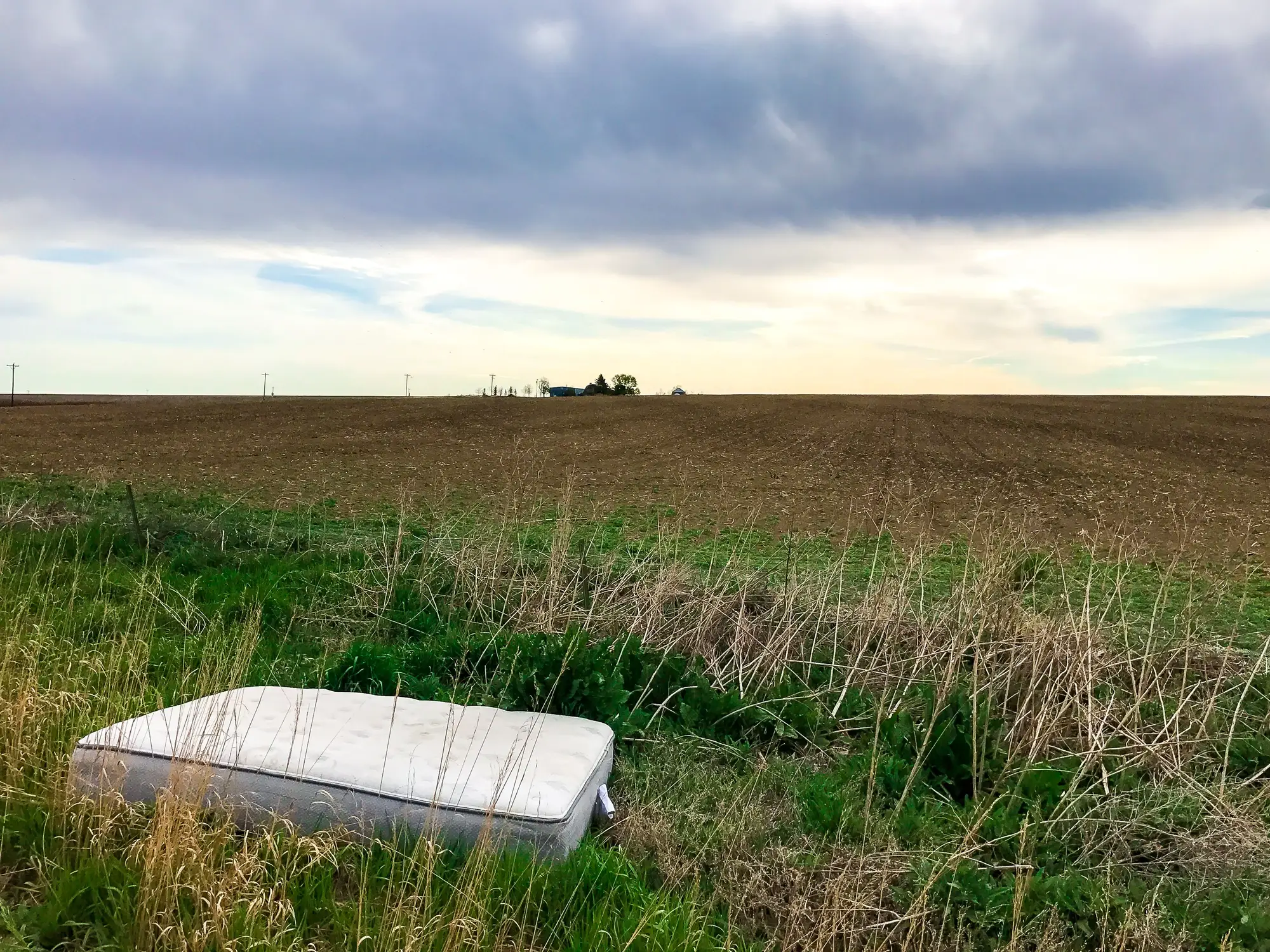
The sweep changes the starting point. Every quarter the whole jurisdiction is looked at from above and compared with the quarter before, and what has appeared comes back as a short dated list. Your officers still drive out and still decide what is a case. They just begin with the tips that are newest and growing, including the ones no one has reported yet.1
What comes back each quarter
2.1 Change-flag layer
GIS layer
Spots where the image has changed since last quarter in a way that fits tipped waste: a new tip, or one that has grown. Opens in QGIS or ArcGIS next to your layer of reported tips.2
2.2 Inspection site list
CSV
One row per flag with coordinates, ordered so an officer can plan a day's driving. Paste it into the spreadsheet or case system you already use.
2.3 Before and after image pair
Image pair
For every flag, the previous quarter's image and this quarter's of the same spot, for the inspection file and for briefing the officer before the visit.
On a pilot, all of this covers the area you choose, not the whole jurisdiction at once.
How it works
Boundary in
Send the boundary of the area to sweep, and say which land types matter most: verges, quarries, vacant land.
List out
The flag layer, the site list and the image pairs are delivered, ready for the next round of site visits.
Ahead of the site visit
Use the list as the front of your queue, alongside the complaints, not instead of them. A flag is somewhere worth a look. The officer goes, decides if it is fly-tipping, finds out who owns the land, and starts the usual process. The public reporting line stays open and still catches what happens between sweeps.
Limits
1A flag is a signal
A flag tells you where to send someone. It is not evidence, it does not show who tipped, and it cannot support a notice or a prosecution on its own.
2Resolution floor
At 0.5 m a pixel is about half a metre across. A pile of a few bags is only a pixel or two wide and is not picked up. A van load or more starts to show as a patch of different texture and colour, and a large heap is clear. Waste under trees, in a covered skip or inside a building is out of sight.
3Quarterly, not continuous
One pass every three months. A tip made the day after a sweep waits for the next one. This is not a same-week alert.
4Cloud on the pass date
Optical imagery needs a clear view. A cloudy pass can push an area to the following quarter.
5Look-alikes
Stacked pallets, a farm's muck heap, building materials on a legitimate site and a quarry's own stockpile can look like tipped waste from above. Some flags will be sites that are perfectly lawful, and your officer rules them out on the visit.
6RGB only
Colour imagery, no thermal. It does not see fires, heat or buried waste.
Who it's for
For
- Environmental enforcement officers and waste crime teams at a council or environment agency who investigate fly-tipping across an area
- Team leaders who plan inspection rounds and want them to start from what has changed
Not for
- Teams that need same-week or live alerts
- Evidence for a notice or prosecution; the visit supplies that
- Tips inside buildings, under cover or too small to show from above
- Household waste collection or clearance contracts
Questions before a pilot
Does a flag confirm illegal dumping?
No. It tells you where to look. An officer still visits, decides whether it is fly-tipping and gathers the evidence.
What does half-metre imagery miss?
Small tips, such as a few bags or a single item, and anything hidden by trees, a roof or a cover. It is better with larger heaps on open ground.
Can it catch a tip the week it happens?
No. It is a quarterly sweep. A new tip waits for the next pass.
What if it is cloudy on the pass date?
The area may slip to the following quarter. We will tell you which areas were affected.
Does it replace public reporting?
No. It covers the ground nobody has phoned about. Reports from the public still matter, especially for what happens between sweeps.
How do we check it against our own records?
Choose a pilot area where you already know the recent tips, and keep that list back. When the flags arrive, compare them with what your officers know and decide for yourselves whether the list is good enough to plan visits from.
Will it load into our case system?
It comes as a GIS layer and a CSV. If your system reads either, it can take it. We do not write into your system directly.
Who owns the results and the imagery?
Ownership and licence terms for the deliverables and the imagery are set out in the pilot agreement before anything is ordered. Ask for them early if your legal team needs to read them.
How is a pilot bought and priced?
We scope and quote each pilot for your area. Tell us how your authority buys services and we will scope the pilot to suit.
Start with one stretch of your patch.
Tell us which area you would sweep first and when your next round of inspections is planned. We will say whether the imagery calendar can meet it.
Start a pilot