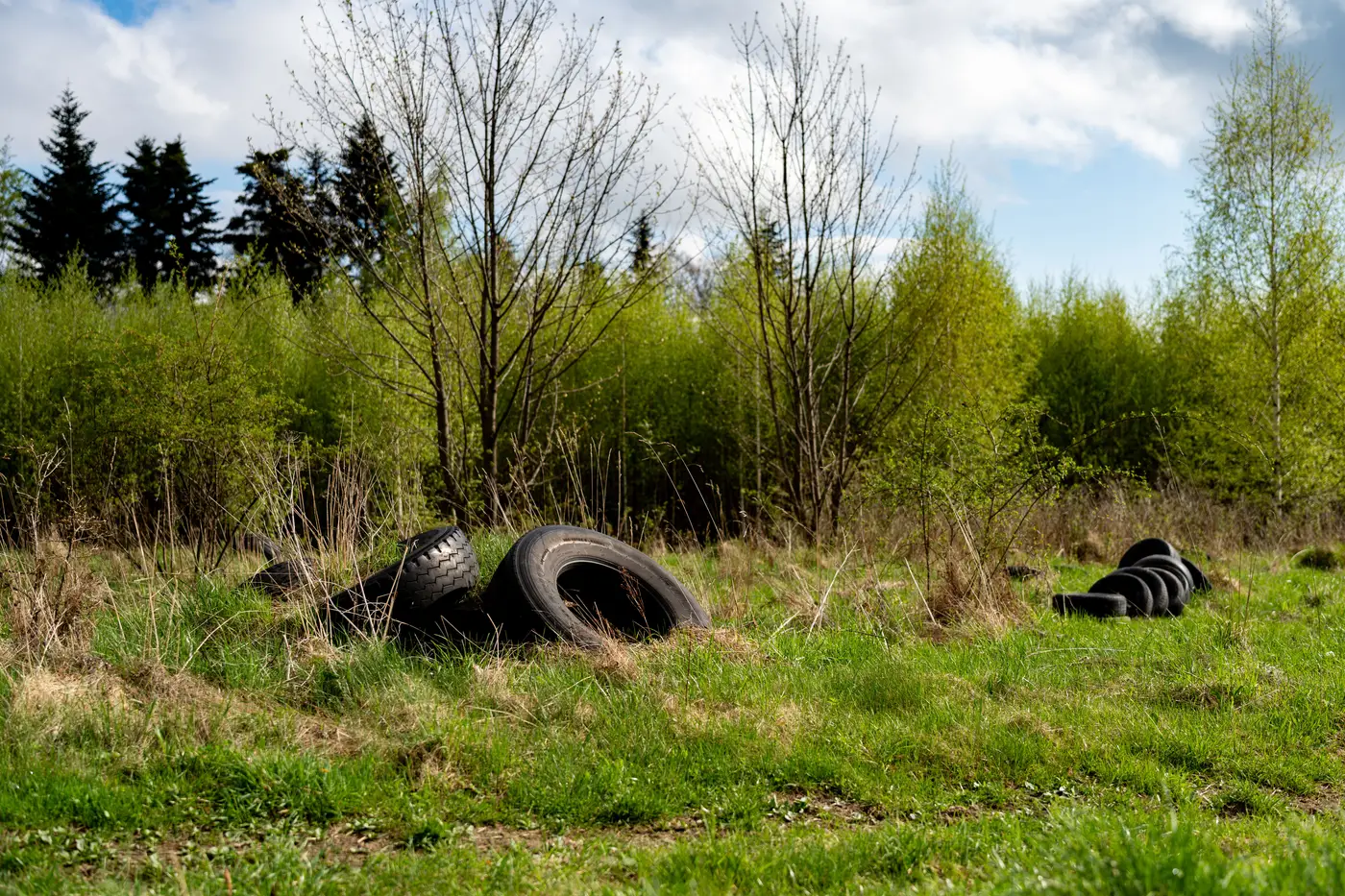
If you work enforcement, you already know "fly-tipping" is the headline and "controlled waste" is the legal plumbing underneath it. Get the definition wrong and a strong case collapses at the first disclosure request. Get it right and you can trace a tipped load back through a chain of people who each had a legal duty to stop it ending up in a lay-by.
What controlled waste actually covers
Controlled waste is defined in the Environmental Protection Act 1990 and the Controlled Waste Regulations: household, commercial and industrial waste. That's deliberately broad. It covers builders' rubble from a house extension, green waste from a landscaping job, pallets and packaging from a warehouse, end-of-life tyres, and most skip contents you'll find tipped on verges and vacant land. It does not automatically cover a handful of exempt categories (certain agricultural waste and mine or quarry waste have their own regimes), which is why the waste description on paperwork matters more than what it looks like from the roadside.
For enforcement purposes, the practical test is simpler than the statute reads: if it came from a household, a business, or a construction site, treat it as controlled waste and ask who was supposed to be looking after it.
Duty of care breach examples you'll actually see
Section 34 of the EPA puts a duty on anyone who produces, carries, keeps, treats or disposes of controlled waste to stop it escaping and to pass it only to an authorised person. In the field, the breach rarely looks like a dramatic midnight dump. It looks like:
- A householder paying a "man with a van" cash in hand, no name taken, no waste carrier number checked.
- A builder handing demolition waste to a subcontractor without confirming where it's actually going.
- A commercial tenant's skip hire firm subbing the job out to an unregistered carrier to save a trip to the tip.
- A landowner letting a "temporary" soil or aggregate stockpile sit for months with no waste transfer note on file, because nobody asked for one.
Each of these is a duty of care breach independent of whether the waste was ever fly-tipped. The tipping is the evidence. The breach is the failure upstream to check who was taking it and where it was going.
Who is liable for fly-tipped controlled waste
Liability doesn't stop at whoever physically dumped the load. Section 34 puts duty on the whole chain: the producer who generated the waste, the carrier who moved it, and the broker who arranged the job. A householder who hands waste to an unregistered carrier can be prosecuted under duty of care even if they never went near the site where it ended up. A landowner who allows unauthorised tipping on their own land, or fails to act once they know it's there, carries separate liability under section 59 clean-up powers.
This is why landowner records matter as much as carrier records. If a quarry operator or a strip of verge-adjacent land keeps showing new material quarter on quarter, the land interest and the waste interest are usually two different conversations, and both need a paper answer.
Waste transfer note requirements, explained plainly
A waste transfer note is the document that proves the duty of care was discharged at each handover. It has to record: a description of the waste, the quantity, how it's contained, the date and place of transfer, and the names, addresses and (where relevant) waste carrier registration numbers of both parties. Season transfer notes, covering a series of regular transfers between the same two parties over up to a year, are allowed where the waste type doesn't change. No transfer note, or a transfer note with gaps, is itself the opening of a duty of care case, well before anyone has to prove where the waste ended up.
For officers building a case, the transfer note (or its absence) is usually faster to establish in court than chain-of-custody testimony. Ask for it first.
None of this paperwork trail tells you where the next load has already landed, and that's the gap most enforcement teams are actually working against: a verge or a quarry edge that's been tipped on since the last time anyone drove past. A quarterly sweep that flags newly disturbed ground against the last pass gives you that starting point before the first complaint call comes in, so the duty of care file you build starts at the right site.
If you're tracking a jurisdiction's verges, quarries and vacant plots for the next fresh dump, that's the one thing Waste Dump Detection does.